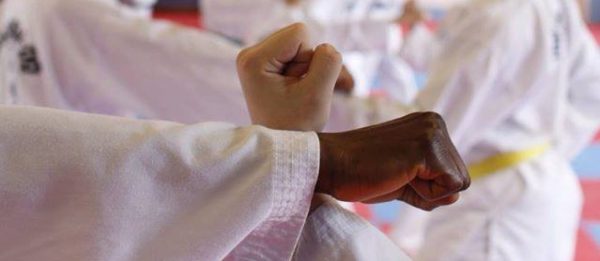
Aside from learning self-defence and becoming fitter, stronger and more flexible, over the years I have noticed that Taekwon-Do has particular physical and mental benefits for practitioners. So I wanted to share a few of these for anyone (of any age and ability) interested in starting.
- Proprioception
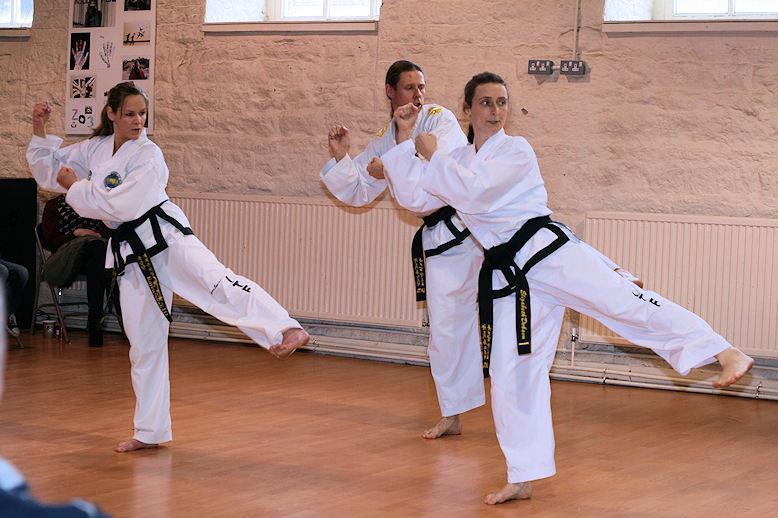
Your sense of awareness about where your body parts are in space and how they are moving without you actually looking at them. This is improved through the practice of patterns pre-arranged routines designed to help students understand distances, angles and how to deliver attacking and defensive techniques with precision. You also develop a keener sense of spatial awareness, about potential threats and how to deal with them.
- Faster reflexes
Reflexes improve through repetition and the development of muscle memory, better fitness and sparring experience. While we are training for self defence, responding to a range of challenges, faster reflexes are actually incredibly helpful in normal life. Parents understand what I mean (catching flying objects and sippy cups that are constantly knocked off the table).

- Balance
One of the major benefits to Taekwon-Do is that you will be practicing and improving your ability to balance, as well as your ability to catch yourself before falling. This is incredibly useful in every-day life, particularly for older people who need to work harder on retaining balance, while being more at risk of fractures/breaks following a fall. Taekwon-Do helps to maintain this while also strengthening your core muscles, which are also important to balance.
We also do everything on both sides of the body and this becomes second nature. You become more ambidextrous. This is important within the context of self-defence, but also for balanced physical development.

- Physical conditioning
They say that it is important to jump. Important for bone density, especially for women moving through their 40s and older. Practicing Taekwon-Do is a profound and deep sort of body conditioning. While developing muscles, you are strengthening bones and increasing your resilience. When we practice blocking opponents we may receive some bruises but also we are conditioning the arms, hands, feet, core and mind even to be more resilient to impact. Even your block can be an attack, for example if you block an untrained arm with the side of your open hand (knifehand) you can cause your attacker pain… or at least give them pause for thought and you time for the same.
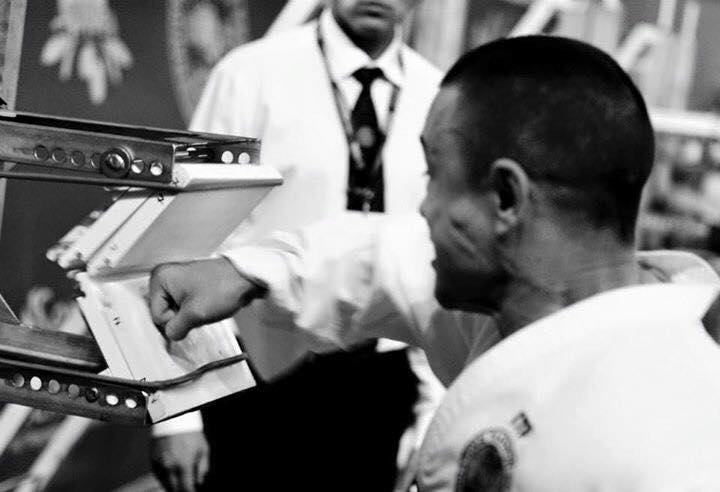
In Taekwon-Do we do not rely on weapons. Because your body is conditioned (to the extent you wish). Men are encouraged to do knuckle pushups on the index and middle finger knuckles, and some even use a Kwon Go or Dallyon Joo (conditioning board) to hit and strengthen the hands.
- Mental conditioning
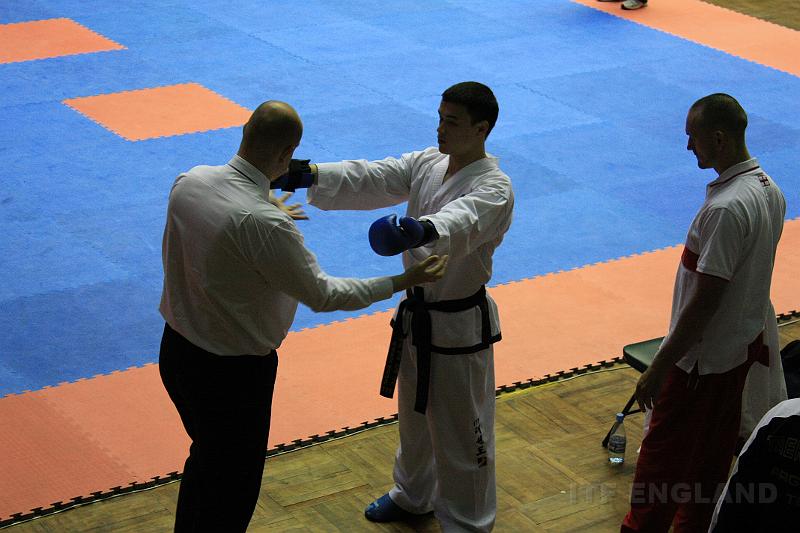
Taekwon-Do includes gradings and opportunities for participating in competitions. These are challenging but safe environments to test yourself. Belt promotions are an enormous accomplishment and students feel pride when moving through the system, in part because they have overcome their fear of performing under pressure. Over time student develop the mental capacity to draw on these experience to navigate other stressful situations: handling conflict, standing up for themselves even presenting at school or at work. You can develop a profound and calm sense of self-control and focus under pressure through Taekwon-Do.
Adults practice board breaking (pine boards and re-breakable wooden boards). Gradually building in technique and confidence the number of boards increases and students start to recognise their natural power and ability as a martial artist growing. Knowledge of your own power and ability to use it is a valuable asset when facing a situation that requires deescalation or (potentially) a physical response.
- Self-confidence
Ultimately, we are not training people to fight, we are supporting the development of your confidence to know that you can defend yourself or someone else should you need to.
- Mental benefits
Training Taekwon-Do includes learning Korean language/terminology for techniques, and Korean history. This also inspires curiosity about Korean culture as this is strong in the Dojang (training hall). It is an intellectual challenge. In addition to training you to cope under stress, Taekwon-Do offers a bubble of mental peace, away from work and life stress, where students become entirely absorbed with training. Practicing Tul (patterns/movement sequences) is a kind of moving meditation. There are 24 Tul and they are a complete physical and mental workout.
There are many skills to accomplish in Taekwon-Do and it all begins with the first challenge – walking into the Dojang (training hall) for the first time, for your first lesson. If you are curious about any of this just get in touch and you will be welcomed warmly by instructors and students. Whatever your goals, hopes and curiosity we’re confident that you’ll start to feel the benefits quickly, and hope that you’ll start to see what we have grown to love about Taekwon-Do and our Taekwon-Do community.
 Huddersfield Taekwon-Do Academy